Home > Press > UCSB Director of Institute for Energy Efficiency Awarded Kavli Professorship
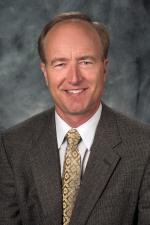 |
| John E. Bowers |
Abstract:
John E. Bowers, a pioneering professor of electrical and computer engineering at UC Santa Barbara and director of the campus's Institute for Energy Efficiency, is the first scholar appointed to the Fred Kavli Chair in Nanotechnology.
UCSB Director of Institute for Energy Efficiency Awarded Kavli Professorship
Santa Barbara, CA | Posted on July 15th, 2009Bowers is recognized as an international leader in the development of novel optoelectronic devices for the next generation of optical networks.
The endowed professorship was established with a gift from Fred Kavli, a Norwegian-born physicist, entrepreneur, and philanthropist, who is dedicated to supporting scientific research and initiatives that have a positive, long-term impact on the human condition. Kavli is a trustee of the UC Santa Barbara Foundation and a generous campus benefactor.
"I am delighted that John is our Fred Kavli Chair in Nanotechnology," said Kavli. "He is an exceptional and accomplished scientist whose research and career -- including serving as the first director of UCSB's Institute for Energy Efficiency -- demonstrate a commitment to science and solving our important issues. I look forward to him continuing this pursuit, not only as a member of the UCSB faculty, but as part of our Kavli community of researchers who share his commitment."
Endowed chairs are highly prized academic positions that honor academic excellence. They enable a university to attract and retain distinguished scholars and to develop more fully a field of study by providing ongoing financial support for enhanced research and teaching.
"The Kavli Chair will allow me to pursue the more speculative ideas in nanotechnology, such as developing nanostructured materials for better thermoelectrics than are found in nature," said Bowers. Noting the international recognition given to the Kavli Foundation and the Kavli Institute because of its support for science worldwide, Bowers said, "I am honored to receive the Kavli Chair in Nanotechnology."
UCSB Chancellor Henry T. Yang described Bowers as "an admired professor, visionary researcher, and internationally renowned innovator in high-speed optoelectronics and silicon photonics. UC Santa Barbara is immensely grateful to Fred Kavli for this endowed chair in nanotechnology, which will support Professor Bowers' groundbreaking research. Fred is an international visionary and giant in advancing scientific research and a great friend to our campus."
Bowers earned his Ph.D. at Stanford University and joined the UCSB faculty in 1987 after working for AT&T Bell Laboratories and Honeywell. He is head of the campus's Institute for Energy Efficiency, which brings together 50 researchers with related expertise to develop new energy-saving technologies. The institute was recently awarded a $19 million federal grant to establish a new Center on Materials for Energy Efficiency Applications.
A prolific scientist, Bowers is the author of more than 450 journal articles and holds 52 patents. He is a member of the National Academy of Engineering and a fellow of the Institute of Electrical and Electronics Engineers (IEEE), the Optical Society of America (OSA), and the American Physical Society. His numerous awards include the IEEE's Photonics Society William Streifer Award and the OSA Holonyak Prize. In addition, Bowers and his co-workers received the ACE Award for Most Promising Technology for the hybrid silicon laser.
In addition to his personal philanthropy, Fred Kavli established the Kavli Foundation. Based in Oxnard, the Kavli Foundation is dedicated to the goals of advancing science for the benefit of humanity and promoting increased public understanding and support for scientists and their work. The foundation's mission is implemented through an international program of research institutes, professorships, and symposia in the fields of astrophysics, nanoscience, neuroscience, and theoretical physics as well as prizes in the fields of astrophysics, nanoscience, and neuroscience. Kavli serves as foundation chair.
At UC Santa Barbara, Kavli has endowed two chairs in engineering, including the professorship in nanotechnology, which was established in 2000 with a $500,000 gift. Previously, the endowment supported the activities of a scholar in the area of microelectromechanical systems technology. In 2002, the Kavli Foundation provided landmark grants to the Kavli Institute for Theoretical Physics (KITP), which is named in his honor. Today, UCSB's institute is one of 15 Kavli institutes worldwide dedicated to advancing fundamental research in the fields of astrophysics, nanoscience, and theoretical physics.
####
About UC Santa Barbara
The University of California, Santa Barbara is a leading research institution that also provides a comprehensive liberal arts learning experience. Because teaching and research go hand in hand at UC Santa Barbara, our students are full participants in an educational journey of discovery that stimulates independent thought, critical reasoning, and creativity. Our academic community of faculty, students, and staff is characterized by a culture of interdisciplinary collaboration that is responsive to the needs of our multicultural and global society. Our commitment to public service is manifested through the creation and distribution of knowledge that advances the well-being of our state, nation, and world. All of this takes place within a living and learning environment like no other, as we draw inspiration, opportunity, and advantage from the beauty and resources of UC Santa Barbara's extraordinary location at the edge of the Pacific Ocean.
For more information, please click here
Contacts:
Eileen Conrad
805-893-8726
George Foulsham
805-893-3071
Copyright © UC Santa Barbara
If you have a comment, please Contact us.Issuers of news releases, not 7th Wave, Inc. or Nanotechnology Now, are solely responsible for the accuracy of the content.
Bookmark:


| Related News Press |
News and information
 Simulating magnetization in a Heisenberg quantum spin chain April 5th, 2024
NRL charters Navy’s quantum inertial navigation path to reduce drift April 5th, 2024
Discovery points path to flash-like memory for storing qubits: Rice find could hasten development of nonvolatile quantum memory April 5th, 2024
Optical computing/Photonic computing
With VECSELs towards the quantum internet Fraunhofer: IAF achieves record output power with VECSEL for quantum frequency converters April 5th, 2024
Chemical reactions can scramble quantum information as well as black holes April 5th, 2024
Optically trapped quantum droplets of light can bind together to form macroscopic complexes March 8th, 2024
HKUST researchers develop new integration technique for efficient coupling of III-V and silicon February 16th, 2024
Announcements
NRL charters Navy’s quantum inertial navigation path to reduce drift April 5th, 2024
Discovery points path to flash-like memory for storing qubits: Rice find could hasten development of nonvolatile quantum memory April 5th, 2024
Appointments/Promotions/New hires/Resignations/Deaths
Leibniz Prize winner Professor Dr. Oliver G. Schmidt moves to Chemnitz University of Technology: President Professor Dr. Gerd Strohmeier refers to an 'absolute top transfer' September 10th, 2021
JEOL USA Welcomes New Managing Director, Hidetaka Sawada April 19th, 2021
The National Space Society Remembers Ben Bova : NSS Mourns the Loss of a Visionary NSS Leader December 2nd, 2020
Energy
Development of zinc oxide nanopagoda array photoelectrode: photoelectrochemical water-splitting hydrogen production January 12th, 2024
Shedding light on unique conduction mechanisms in a new type of perovskite oxide November 17th, 2023
Inverted perovskite solar cell breaks 25% efficiency record: Researchers improve cell efficiency using a combination of molecules to address different November 17th, 2023
The efficient perovskite cells with a structured anti-reflective layer – another step towards commercialization on a wider scale October 6th, 2023
 |
||
 |
||
| The latest news from around the world, FREE | ||
 |
||
|
|
||
| Premium Products | ||
 |
||
|
Only the news you want to read!
Learn More |
||
 |
||
|
Full-service, expert consulting
Learn More |
||
|
|
||