Home > Press > Clemson biophysicist recognized with NSF CAREER Award
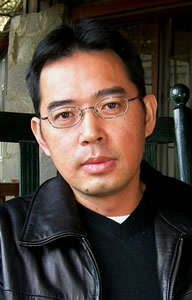 |
| Pu-Chun Ke |
Abstract:
Clemson biophysicist Pu-Chun Ke has received a $400,000 National Science Foundation CAREER Award and other international recognition for his research into the self-assembly of carbon nanomaterials in living systems and how they impact human health and the environment.
Clemson biophysicist recognized with NSF CAREER Award
Clemson, SC | Posted on March 28th, 2008In his research, Ke discovered that certain mammalian colon cancer cells contract when cell membranes interact with nanoparticles. This experiment offered a first-hand look at how nanomaterials interact with cell membranes and may trigger toxicity. His research also looks at how nanoparticles coated with different matter react in different aquatic solutions and in the food chain.
Nanoscience is the study of how materials behave when their dimensions are reduced to the nanoscale: 100,000th the size of a single human hair.
"With the mass production of nanomaterials in research labs and on the consumer market it has become imperative to understand the potential impact of these materials after they are incorporated into biological systems or discharged into the environment," said Ke, who is a professor in the department of physics and astronomy. "A major effort in our lab is to decipher the behaviors of nanomaterials in living systems and relate the biophysical studies to practical issues, such as gene- and drug-delivery and toxicity."
The Faculty Early Career Development (CAREER) Program offers the National Science Foundation's most prestigious awards in support of the early career-development activities of teacher-scholars who most effectively integrate research and education within the context of the mission of their organizations.
Ke and his research interests also were featured recently on the flagship page of Nature.com. The Journal of Physics: Condensed Matter named a review paper, "Carbon Nanomaterials in Biological Systems," that he wrote with collaborator Rui Qiao, a professor of mechanical engineering, one of its top papers of 2007. According to the journal, the selection includes the papers and review articles that are considered the very best contributions from 2007 — those with the highest importance and that receive the highest number of downloads.
"These are great and much deserved honors for Pu-Chun Ke," said associate vice president for research and economic development John Ballato. "Given the accelerating pace of scientific advancements in today's technology-driven world, it's always a fight to stay at the cutting edge of the state of the art. This international recognition clearly points to the caliber of Dr. Ke's research and further validates Clemson's strength in advanced materials."
####
About Clemson University
Today, Clemson is redefining the term “top-tier research university” by combining the best of two models: the scientific and technological horsepower of a major research university and the highly engaged academic and social environment of a small college. With a distinctive governance system that fosters stability in leadership, unique college structures that create an unmatched climate for collaboration, and a driven, competitive spirit that encourages faculty, staff and students to embrace bold, sometimes audacious, goals, Clemson has set its sights on being one of the nation’s top-20 public universities by 2011.
That vision — first outlined by President James F. Barker ’70 and officially adopted by the Board of Trustees in 2001 — has united members of the Clemson Family who understand what it takes to be a top research university and what Clemson’s success will mean for students, for South Carolina and for society.
For more information, please click here
Contacts:
Pu-Chun Ke
(864) 656-0558
WRITER:
Susan Polowczuk
(864) 656-2063
Copyright © Clemson University
If you have a comment, please Contact us.Issuers of news releases, not 7th Wave, Inc. or Nanotechnology Now, are solely responsible for the accuracy of the content.
Bookmark:


| Related News Press |
News and information
 Simulating magnetization in a Heisenberg quantum spin chain April 5th, 2024
NRL charters Navy’s quantum inertial navigation path to reduce drift April 5th, 2024
Discovery points path to flash-like memory for storing qubits: Rice find could hasten development of nonvolatile quantum memory April 5th, 2024
Govt.-Legislation/Regulation/Funding/Policy
NRL charters Navy’s quantum inertial navigation path to reduce drift April 5th, 2024
Discovery points path to flash-like memory for storing qubits: Rice find could hasten development of nonvolatile quantum memory April 5th, 2024
Chemical reactions can scramble quantum information as well as black holes April 5th, 2024
Academic/Education
Rice University launches Rice Synthetic Biology Institute to improve lives January 12th, 2024
Multi-institution, $4.6 million NSF grant to fund nanotechnology training September 9th, 2022
Announcements
NRL charters Navy’s quantum inertial navigation path to reduce drift April 5th, 2024
Discovery points path to flash-like memory for storing qubits: Rice find could hasten development of nonvolatile quantum memory April 5th, 2024
Safety-Nanoparticles/Risk management
Tests find no free-standing nanotubes released from tire tread wear September 8th, 2023
Billions of nanoplastics released when microwaving baby food containers: Exposure to plastic particles kills up to 75% of cultured kidney cells July 21st, 2023
Grants/Sponsored Research/Awards/Scholarships/Gifts/Contests/Honors/Records
Discovery points path to flash-like memory for storing qubits: Rice find could hasten development of nonvolatile quantum memory April 5th, 2024
Chemical reactions can scramble quantum information as well as black holes April 5th, 2024
 |
||
 |
||
| The latest news from around the world, FREE | ||
 |
||
|
|
||
| Premium Products | ||
 |
||
|
Only the news you want to read!
Learn More |
||
 |
||
|
Full-service, expert consulting
Learn More |
||
|
|
||