Home > Press > University hires leading scientist in polymer-nanocomposite, fuel-cell research
 |
Abstract:
One of the world's leading scientists in nanotechnogy and fuel-cell research will join the University of South Carolina's faculty in 2008.
University hires leading scientist in polymer-nanocomposite, fuel-cell research
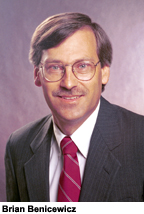
Columbia, SC | Posted on December 12th, 2007Dr. Brian Benicewicz, the director of the New York State Center for Polymer Synthesis and a professor of chemistry at the Rensselaer Polytechnic Institute, will be the holder of the endowed chair in the Center of Economic Excellence for Polymer Nanocomposite Research. His hiring is part of the S.C. Center of Economic Excellence (CoEE) program, which was established to fuel economic development by using state funding to create research centers at the state's three research universities.
Benicewicz, whose research team will be located in the Horizon I building of Innovista, the university's research district, will enhance the university's research strength in two key areas: polymer nanocomposites and future fuels.
"Dr. Benicewicz joins the university at a time when our research reputation is growing," said Dr. Harris Pastides, the university's vice president for research and health sciences. "The addition of the Center of Economic Excellence for Polymer Nanocomposite Research will enable the university to play a leading role in the future of nanoscience and plastics, the largest manufacturing industry in South Carolina."
The Palmetto State is one of the nation's top producers of plastics, specifically commodity polymers that are used to manufacture packaging products for items such as juices, water, soft drinks, household cleaners and cosmetics. The university and plastics manufacturers have been working since 2002 to study the competitive advantage that nanoscience may offer in developing new products or improving those that already exist.
"Polymer-nanocomposite research is key to the economic development of South Carolina," Dr. Tom Vogt, director of the university's Nanocenter, said. "Bringing Dr. Benicewicz and his research team to the university is a major move forward for an industry that plays such a critical role in the Palmetto State's job market and economy."
Benicewicz, whose research funding includes grants from the National Science Foundation, the U.S. Department of Energy and private industry, also will collaborate with researchers in the university's College of Engineering and Computing, a leader in alternative-fuels research and home to the nation's only Industry/University Cooperative Research Center for Fuel Cells funded by the National Science Foundation.
Benicewicz said he was attracted to the university because its leadership is creating a research and teaching environment that will positively impact the university and the state for many years.
"This vision for the future, combined with the outstanding faculty and students I met during my visits, were the primary factors in my decision to join the University of South Carolina," he said. "My research is focused in two major areas that overlap with key research directions of the university: polymer nanocomposites and new polymers for fuel-cell membranes. The opportunity to work with other top researchers in these areas at South Carolina is very exciting and will push our research in new directions."
Dr. Gordon Calundann, the chief technology officer at BASF Fuel Cell GmbH/Inc. in Somerset, N.J., said Benicewicz's move to the University of South Carolina is a "triple-win event."
"The university, with its powerful and still-developing infrastructure in fuel-cell technology, now adds to this growing capability the nation's leading academic researcher and laboratory in high-temperature polymer electrolyte membranes," Calundann said.
"With Dr. Benicewicz, the University of South Carolina adds a world-class synthetic-polymer scientist to its already distinguished staff in the alternative-energy field," he said. "Finally, and perhaps most important from my viewpoint, this move can only aid and accelerate the commercialization of fuel-cell products developed by BASF."
In his leadership role as the endowed chair of the Center of Economic Excellence in Polymer Nanocomposite Research, Benicewicz will position the university as an internationally recognized center of research and education and help it pursue collaborations with businesses and industries in South Carolina, Dr. Mary Anne Fitzpatrick, dean of the university's College of Arts and Sciences, said.
"The college is proud to be selected for a center that is expected to advance the state's economy through its research, and ultimately, create jobs through the application and commercialization of Dr. Benicewicz's research," Fitzpatrick said. "Dr. Benicewicz is another example of the excellent faculty whom we are bringing to the college and the university to work with our outstanding faculty."
The S.C. CoEE program was created by the S.C. General Assembly in 2002 with $200 million in funding from the S.C. Education Lottery for the state's research universities - the University of South Carolina, Clemson University and the Medical University of South Carolina. State funding for the centers, which ranges from $2 million to $5 million, must be matched with private, federal or municipal funds.
The Carnegie Foundation has designated the University of South Carolina as an institution of "very high research activity," the highest distinction awarded to only 62 public research institutions.
####
About University of South Carolina
For two centuries, the University of South Carolina’s scholarship, research and outreach efforts have contributed to the greater good of society. With 39,000 students on eight campuses and more than 350 degree programs -- including law, engineering, public health and medicine -- and 240,000 living alumni, the university is improving the lives of individuals in South Carolina and around the world. South Carolina has received the highest research designation awarded by the Carnegie Foundation, and the university’s undergraduate international-business program is ranked best in the nation in U.S. News & World Report.
Dr. Brian Benicewicz
Dr. Brian Benicewicz is the director of the New York State Center for Polymer Synthesis and a professor of chemistry and chemical biology at Rensselaer Polytechnic Institute.
He will join the University of South Carolina in August 2008 as the holder of the endowed chair in the Center of Economic Excellence for Polymer Nanocomposite Research. He and his research team will have their laboratory in the Horizon I building of Innovista.
Benicewicz, 53, began his career at the Celanese Research Co. and was a senior scientist at Ethicon Inc., a Johnson & Johnson company. He spent 12 years at the Los Alamos National Laboratory, where he led a research team studying polymers. He has commercialized many of his innovations and has collaborated with many high-profile industries, including Shell Oil, Axiva, Rohm and Hass, and Celanese Ventures. Benicewicz has a start-up company that is focused on fuel-cell and related hydrogen technologies.
The New York State Center for Polymer Synthesis has approximately 20 faculty, as well as a large research unit comprising undergraduate and graduate students, and focuses on three key areas: groundbreaking research, collaborations with government and industry and undergraduate and graduate education.
Benicewicz earned a bachelor’s degree from the Florida Institute of Technology in 1976 and a doctoral degree in polymer chemistry from the University of Connecticut in 1980.
For more information, please click here
Contacts:
Margaret M. Lamb
director
803-777-5400
Copyright © University of South Carolina
If you have a comment, please Contact us.Issuers of news releases, not 7th Wave, Inc. or Nanotechnology Now, are solely responsible for the accuracy of the content.
Bookmark:


| Related News Press |
Academic/Education
 Rice University launches Rice Synthetic Biology Institute to improve lives January 12th, 2024
Multi-institution, $4.6 million NSF grant to fund nanotechnology training September 9th, 2022
Materials/Metamaterials/Magnetoresistance
Nanoscale CL thermometry with lanthanide-doped heavy-metal oxide in TEM March 8th, 2024
Focused ion beam technology: A single tool for a wide range of applications January 12th, 2024
Announcements
NRL charters Navy’s quantum inertial navigation path to reduce drift April 5th, 2024
Discovery points path to flash-like memory for storing qubits: Rice find could hasten development of nonvolatile quantum memory April 5th, 2024
Appointments/Promotions/New hires/Resignations/Deaths
Leibniz Prize winner Professor Dr. Oliver G. Schmidt moves to Chemnitz University of Technology: President Professor Dr. Gerd Strohmeier refers to an 'absolute top transfer' September 10th, 2021
JEOL USA Welcomes New Managing Director, Hidetaka Sawada April 19th, 2021
The National Space Society Remembers Ben Bova : NSS Mourns the Loss of a Visionary NSS Leader December 2nd, 2020
Fuel Cells
Current and Future Developments in Nanomaterials and Carbon Nanotubes: Applications of Nanomaterials in Energy Storage and Electronics October 28th, 2022
 |
||
 |
||
| The latest news from around the world, FREE | ||
 |
||
|
|
||
| Premium Products | ||
 |
||
|
Only the news you want to read!
Learn More |
||
 |
||
|
Full-service, expert consulting
Learn More |
||
|
|
||